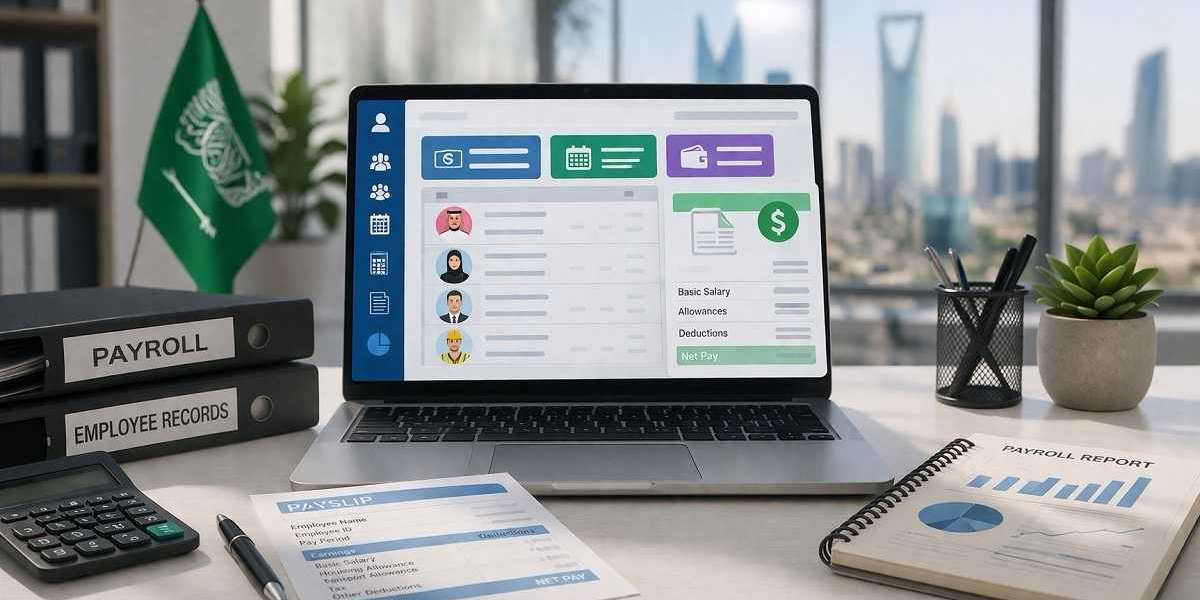

Managing employee compensation accurately and efficiently has become a top priority for organizations across Saudi Arabia. As businesses continue to embrace digital transformation in 2026, payroll management systems are playing a critical role in ensuring timely salary payments, regulatory compliance, and workforce satisfaction. Modern companies are increasingly adopting برنامج الرواتب to streamline payroll processes and gain better control over employee payment tracking.
Today, برنامج الرواتب is far more than a tool for calculating monthly salaries. It serves as a comprehensive payroll management solution that tracks earnings, deductions, allowances, bonuses, overtime, and tax-related information. For organizations operating in Saudi Arabia’s evolving business environment, payroll software provides the accuracy and transparency needed to support both employers and employees.
The Growing Importance of Payroll Management in 2026
Payroll is one of the most sensitive functions within any organization. Employees expect to receive accurate payments on time, while businesses must ensure compliance with labor laws and company policies.
Traditional payroll processing methods often involve spreadsheets, manual calculations, and paper-based records. These outdated approaches increase the risk of errors, delays, and administrative inefficiencies.
As workforce structures become more complex, businesses require modern solutions that can automate calculations, manage employee records, and provide complete visibility into payment activities. Payroll software addresses these challenges by creating a centralized platform for managing employee compensation.
Organizations that invest in payroll automation are better positioned to improve operational efficiency while maintaining employee trust.
Understanding Employee Payment Tracking
Employee payment tracking refers to the process of monitoring all compensation-related activities within an organization. This includes salary calculations, deductions, bonuses, overtime payments, commissions, allowances, and payroll history.
Accurate tracking is essential because even minor payroll mistakes can affect employee morale and create compliance risks. Companies need reliable systems that provide complete records of every payroll transaction.
Modern payroll software enables HR and finance teams to access detailed payment histories instantly. This transparency reduces confusion and supports accurate financial reporting.
By maintaining comprehensive payroll records, organizations can ensure accountability and improve workforce management.
How Payroll Software Automates Salary Calculations
One of the biggest advantages of payroll software is its ability to automate salary calculations. Manual payroll processing requires significant time and attention to detail, especially in organizations with large workforces.
Payroll systems automatically calculate salaries based on employee contracts, attendance records, overtime hours, allowances, and deductions. This automation minimizes human errors and ensures consistency across payroll cycles.
For businesses in Saudi Arabia, payroll software helps simplify complex compensation structures while ensuring employees receive accurate payments every month.
Automation also allows payroll teams to process salaries faster, reducing administrative workloads and improving efficiency.
Improving Accuracy Across Payroll Operations
Payroll accuracy directly impacts employee satisfaction and organizational credibility. Errors in salary payments can lead to disputes, delays, and reduced employee confidence.
Payroll software enhances accuracy by using predefined rules and automated calculations. Instead of relying on manual data entry, organizations can establish standardized payroll processes that reduce inconsistencies.
The software automatically applies company policies, employee benefits, and deduction structures, ensuring every payroll cycle follows the same guidelines.
As a result, organizations experience fewer payroll discrepancies and greater confidence in their compensation processes.
Real-Time Access to Payroll Information
Modern businesses require instant access to workforce and financial data. Payroll software provides real-time visibility into employee payment information, allowing managers and HR professionals to make informed decisions.
Payroll administrators can monitor salary processing status, review payment records, and identify potential issues before payroll is finalized.
Employees also benefit from self-service portals that provide access to salary information, payslips, tax documents, and compensation history.
This level of transparency strengthens communication between employers and employees while reducing administrative inquiries.
Enhancing Compliance with Labor Regulations
Compliance remains a critical concern for organizations operating in Saudi Arabia. Payroll processes must align with labor laws, company policies, and financial reporting requirements.
Payroll software helps organizations maintain compliance by automating calculations according to predefined regulations. The system generates accurate records and stores payroll data securely for auditing purposes.
Organizations can easily produce reports that demonstrate compliance with internal and external requirements.
By reducing reliance on manual processes, payroll software minimizes compliance risks and helps businesses maintain regulatory standards.
Supporting Multi-Location Workforce Management
Many organizations operate across multiple branches, offices, or project sites. Managing payroll for distributed workforces can be challenging without centralized systems.
Payroll software consolidates employee payment information from different locations into a single platform. HR and finance teams can manage payroll consistently regardless of workforce size or geographic distribution.
This centralized approach improves visibility and ensures that all employees receive accurate compensation based on company policies.
For growing organizations, centralized payroll management supports scalability and operational consistency.
Integrating Payroll with Attendance Systems
Accurate attendance tracking plays an important role in payroll processing. Overtime hours, absences, leave balances, and shift differentials all influence employee compensation.
Modern payroll software integrates seamlessly with attendance management systems. Attendance data automatically flows into payroll calculations, reducing manual input and improving accuracy.
This integration eliminates duplicate data entry while ensuring that compensation reflects actual employee attendance records.
Organizations benefit from streamlined workflows and reduced administrative effort.
Managing Overtime and Variable Compensation
Many industries rely on overtime, performance incentives, commissions, and bonuses as part of employee compensation packages.
Tracking these variable payments manually can be complex and time-consuming. Payroll software simplifies the process by automatically calculating additional earnings based on predefined rules.
Managers can review compensation details before payroll processing, ensuring accuracy and transparency.
Employees gain confidence knowing that overtime and incentive payments are calculated consistently and fairly.
Enhancing Employee Satisfaction Through Transparency
Employees want clarity regarding how their compensation is calculated. Lack of transparency can create confusion and reduce trust in payroll processes.
Payroll software improves transparency by providing detailed salary breakdowns, payment histories, and digital payslips. Employees can access compensation information whenever needed.
This visibility helps employees understand deductions, allowances, overtime payments, and bonuses without requiring assistance from HR departments.
Greater transparency contributes to stronger employee relationships and improved workplace satisfaction.
Reducing Administrative Workloads
Payroll administration often requires substantial time and effort, particularly in organizations with large workforces.
Manual payroll processes involve data collection, calculations, recordkeeping, report generation, and employee inquiries. These responsibilities can consume valuable resources.
Payroll software automates repetitive tasks, allowing HR and finance teams to focus on strategic initiatives rather than administrative work.
The result is improved productivity, reduced operational costs, and more efficient workforce management.
Strengthening Data Security
Payroll data contains sensitive employee and financial information. Protecting this information is essential for maintaining trust and regulatory compliance.
Modern payroll software includes advanced security features such as encryption, role-based access controls, and secure data storage.
These protections help organizations prevent unauthorized access and reduce cybersecurity risks.
Secure payroll systems also support business continuity by ensuring important data remains protected and accessible when needed.
Leveraging Payroll Analytics for Better Decision-Making
Payroll software generates valuable insights that support workforce planning and financial management.
Organizations can analyze payroll expenses, compensation trends, overtime costs, and workforce allocation patterns. These insights help leaders make informed decisions regarding budgeting, staffing, and compensation strategies.
Advanced reporting tools allow businesses to identify opportunities for cost optimization while maintaining employee satisfaction.
Data-driven decision-making strengthens organizational performance and supports long-term growth.
Payroll Software and Saudi Vision 2030
Saudi Arabia’s Vision 2030 emphasizes innovation, digital transformation, and operational excellence across industries. Payroll automation aligns closely with these national objectives.
Organizations that adopt payroll software improve efficiency, reduce administrative complexity, and enhance workforce management practices.
Digital payroll systems also support transparency, accountability, and data-driven decision-making, all of which contribute to organizational success.
As businesses continue modernizing their operations, payroll software remains an essential component of sustainable growth and digital transformation.
Future Trends in Employee Payment Tracking
The future of payroll management will be shaped by artificial intelligence, automation, cloud technology, and advanced analytics.
Organizations are increasingly seeking solutions that provide predictive insights, automated compliance monitoring, and enhanced employee experiences.
Cloud-based payroll platforms offer greater flexibility and accessibility, allowing organizations to manage payroll from anywhere.
As technology continues to evolve, payroll software will become even more intelligent, efficient, and valuable for businesses across Saudi Arabia.
Organizations across Saudi Arabia are leveraging payroll technology to reduce errors, strengthen employee trust, and improve operational efficiency. As workforce management becomes increasingly complex, modern payroll solutions provide the visibility, accuracy, and scalability needed to support long-term business success.
Companies that invest in advanced payroll systems today are better prepared to meet future workforce demands while maintaining compliance and employee satisfaction.
FAQs
1. What is برنامج الرواتب?
It is payroll software designed to automate salary processing and employee payment management.
2. How does payroll software improve payment tracking?
It records, monitors, and manages all payroll transactions in a centralized system.
3. Can payroll software reduce salary calculation errors?
Yes, automated calculations significantly improve payroll accuracy.
4. Does payroll software integrate with attendance systems?
Yes, most modern payroll solutions integrate with attendance and HR management platforms.
5. Why is payroll software important in 2026?
It enhances efficiency, compliance, transparency, and employee satisfaction while supporting digital transformation.